One useful drawer became a system.
It began as a beginner's answer to a messy workbench. What followed was built around one rule: keep what people had already printed, and let everything new add to it.
Start small. Add only what you need. Make it yours.
One useful drawer
The useful thing that was not there
I had just bought a 3D printer, and parts for it were already collecting around the workbench. At the time, there were fewer models to find and fewer places to look. I spent hours searching for a simple drawer that fit what I needed. I could not find one.
So I tried making it.
It was one of my earliest 3D-modeling projects: a straightforward drawer with an obvious job. It held the loose parts and gave them a place. That was my introduction to functional 3D printing - not making something because a printer could, but making the useful thing that was missing.
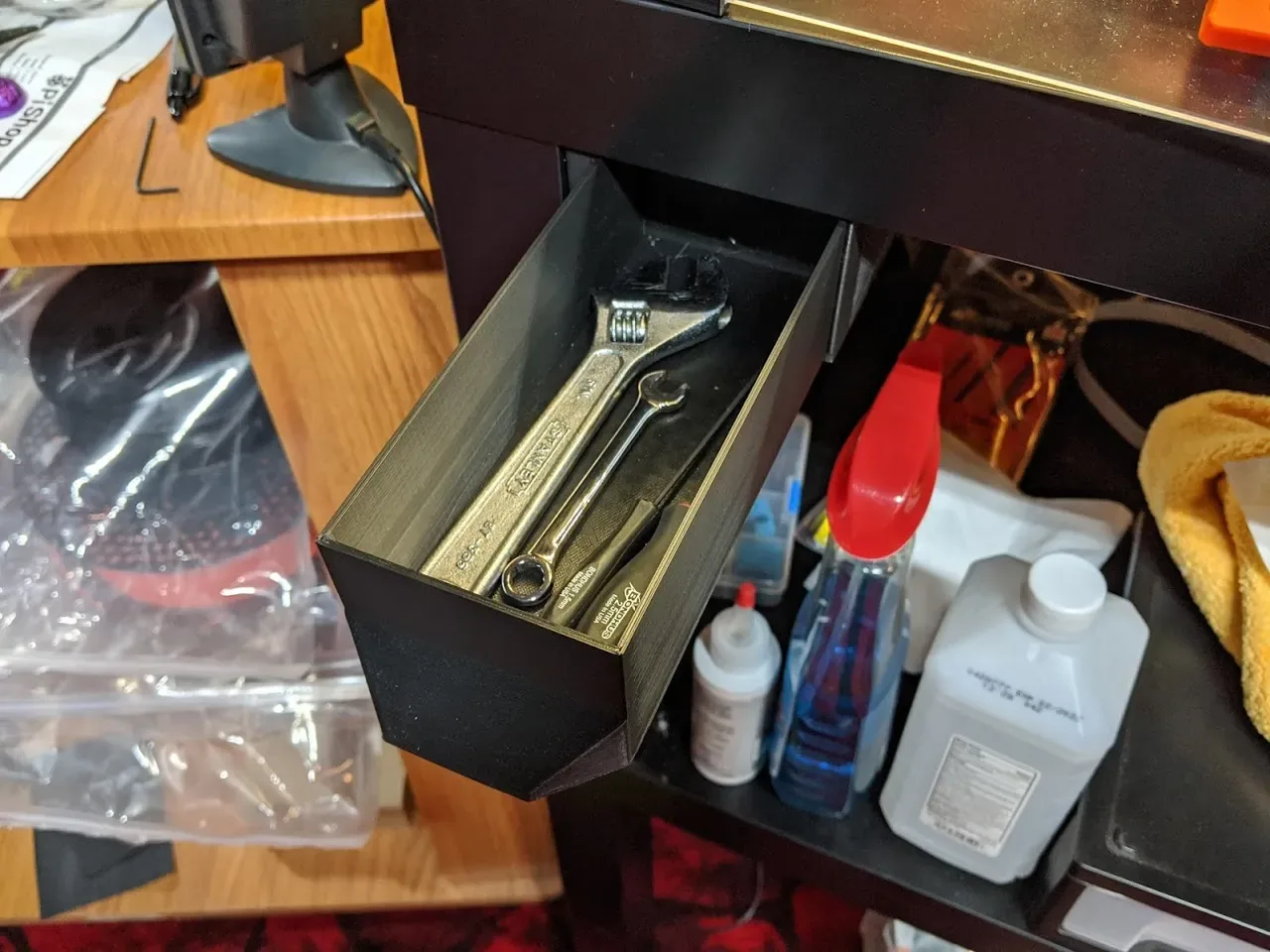
Then other people found uses for it
I shared the drawer in case it helped someone else. The response was larger than I understood at first. People asked for wider drawers and versions for specific jobs. Their questions showed that the personal solution had more work to do.
It still was not a system. But it was no longer only mine. The original listing, still up
The first lesson was simple: make the useful thing that does not exist.
A drawer becomes a system
The drawer worked. Replacing its case did not.
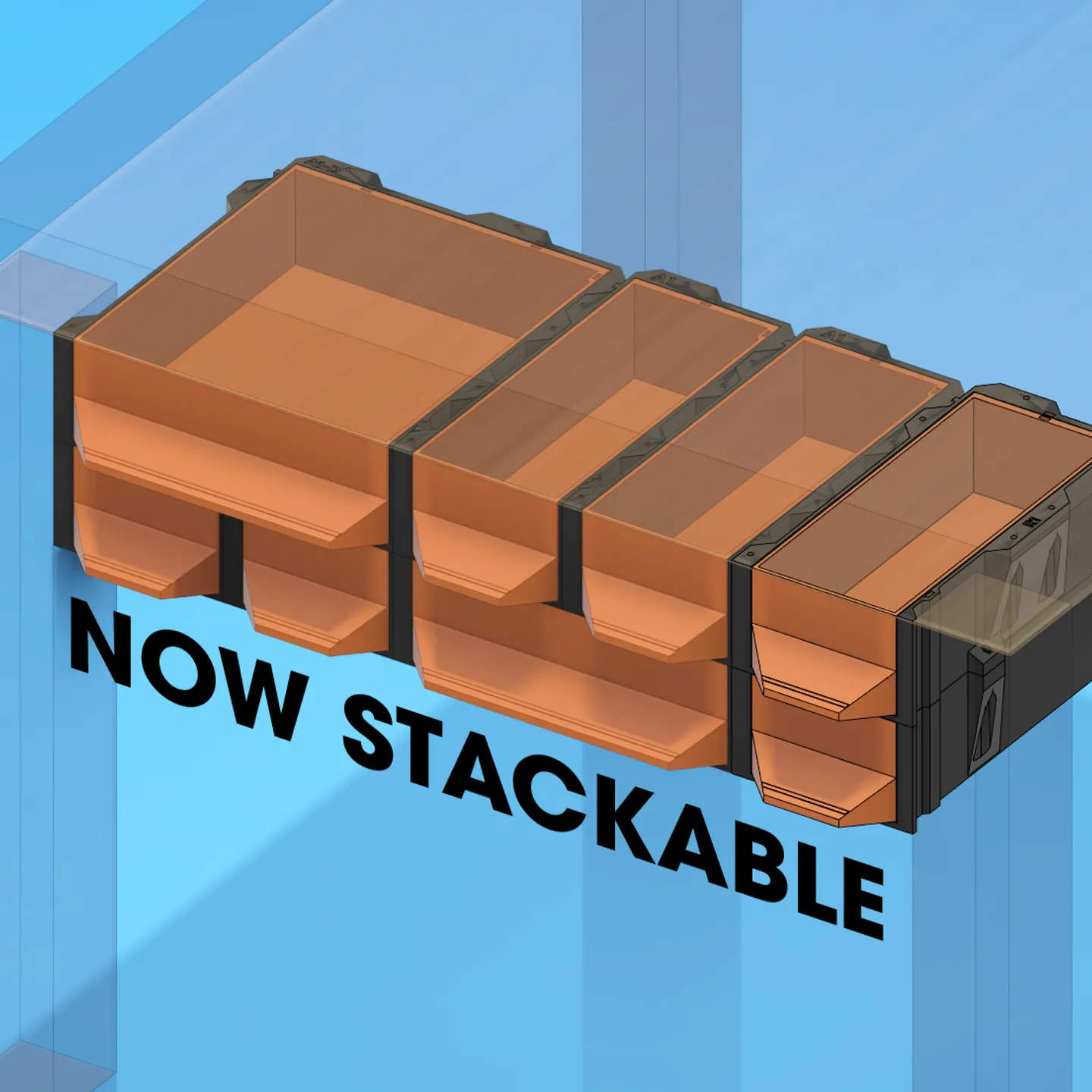
The early cases were fixed beneath a table with small wood screws. That was fine until I wanted to revise one. Each change meant reaching underneath, removing the case, putting more holes in the table, and fastening another one in its place.
I started looking for a connection that worked more like a T-slot: something that could hold a case securely, but still let it slide out later. That search led to the dovetail interface.
Now a case could slide into place and slide out again. The same connection could repeat beneath the case, so one case could support another. The drawer had become one part of a structure that could grow.
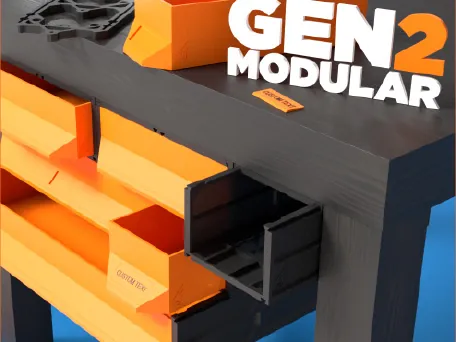
Keep the drawer. Change what grows around it.
I already owned the earlier drawers, and other people had printed them too. I did not want a better case to make those drawers useless. So the new structure was designed around what already existed.
That decision became a rule: every meaningful change should add to the system without asking people to throw away the useful parts they had already made.
The next version should make an earlier print more useful - not obsolete.
People wanted it to keep going
Creating the Club was another turning point. I did not expect anyone to join. When people did, their support felt like encouragement and a responsibility: they believed the project could keep growing, and trusted me to keep working on it.

It becomes effortless
The first tabletop kit exposed the next problem
The first Table Top Kit moved the system out from under the desk, but assembling it meant installing many parts from the back. It was slow, awkward work, often done without a clear view of what your hands were doing.
When I showed it in a video, people said so.
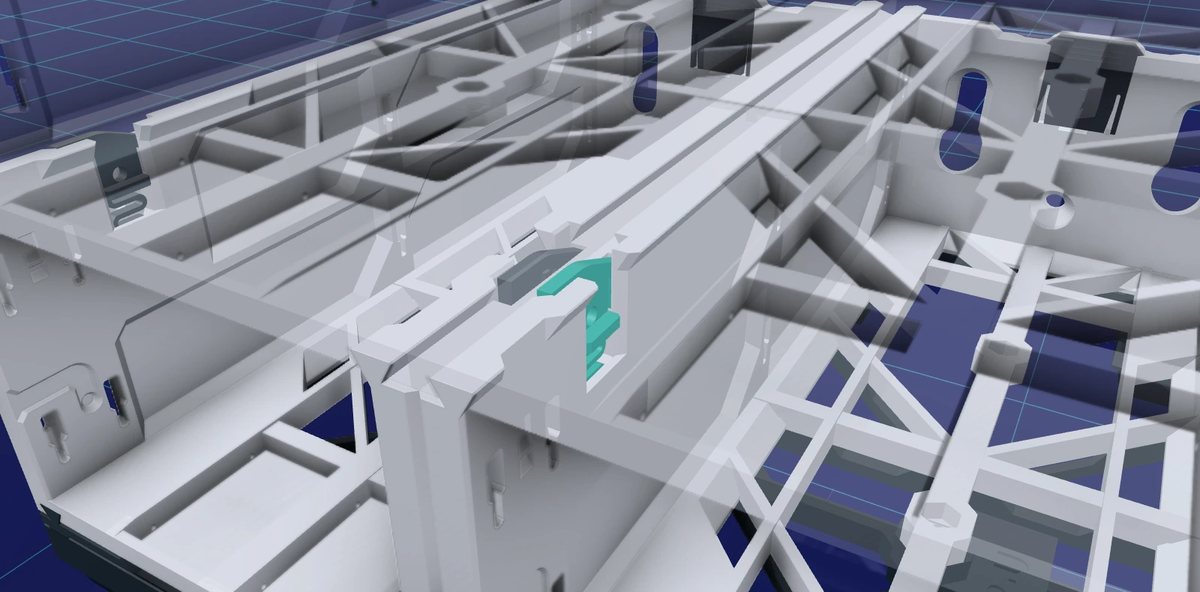
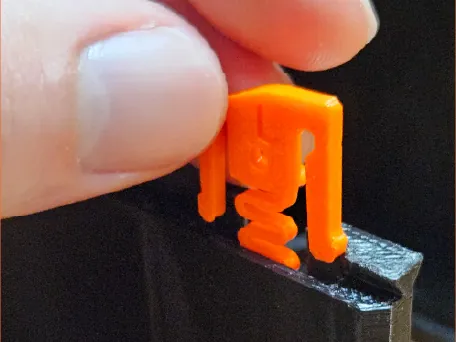
Some of the feedback pointed toward compliant mechanisms. I did not know much about them, so I started learning. Over many working sessions across several weeks, I tested ways to make the movement simpler without changing the parts people already owned.
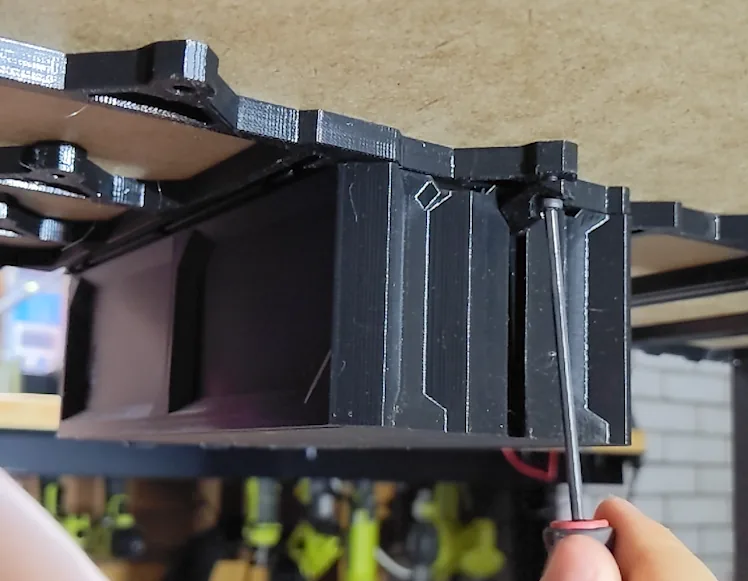
Two tabs changed the feel of the whole system
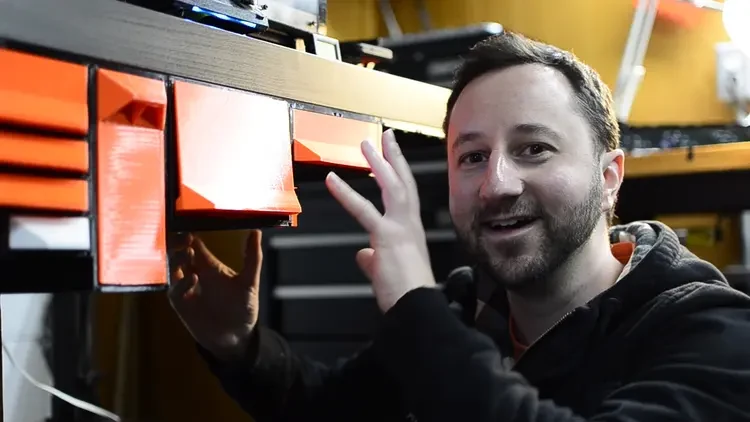
After many revisions, that work became QuickLock. Press the tabs and a case comes free in roughly two seconds. Slide it back into place and it locks again.
What had taken minutes of awkward work behind a drawer became one quick, visible motion. Rearranging the system no longer felt like rebuilding it.
Interest rose quickly after that. The mechanism was satisfying to watch, but its real value was practical: the system had become as easy to change as it was to imagine changing.
A table in Goshen
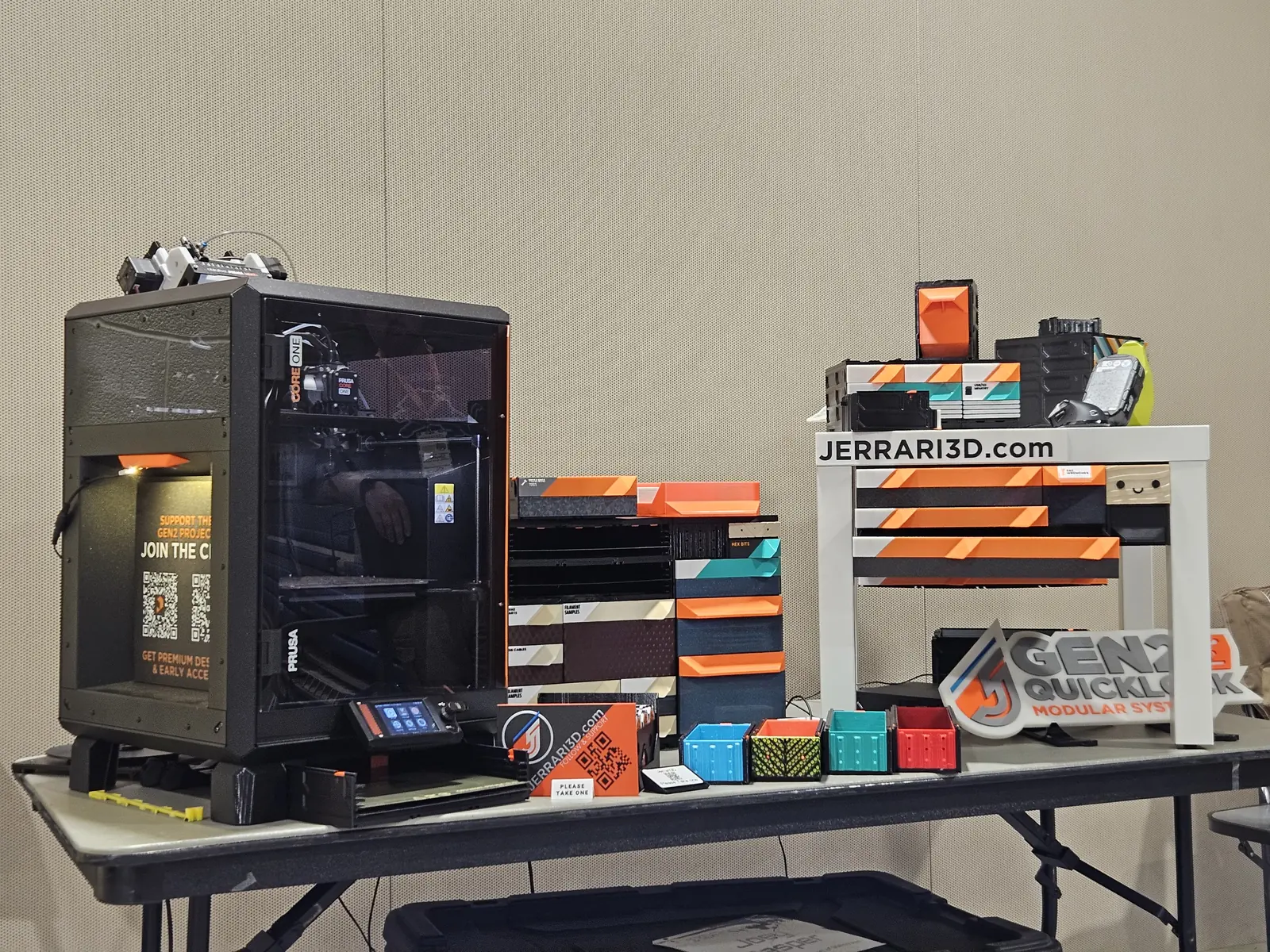
At MRRF that spring, I set up a table to show the system in person. People kept stopping. I talked through it so many times that I lost my voice on the first day.
The surprise was not attention for its own sake. It was watching people recognize a useful thing they could make on their own printers.
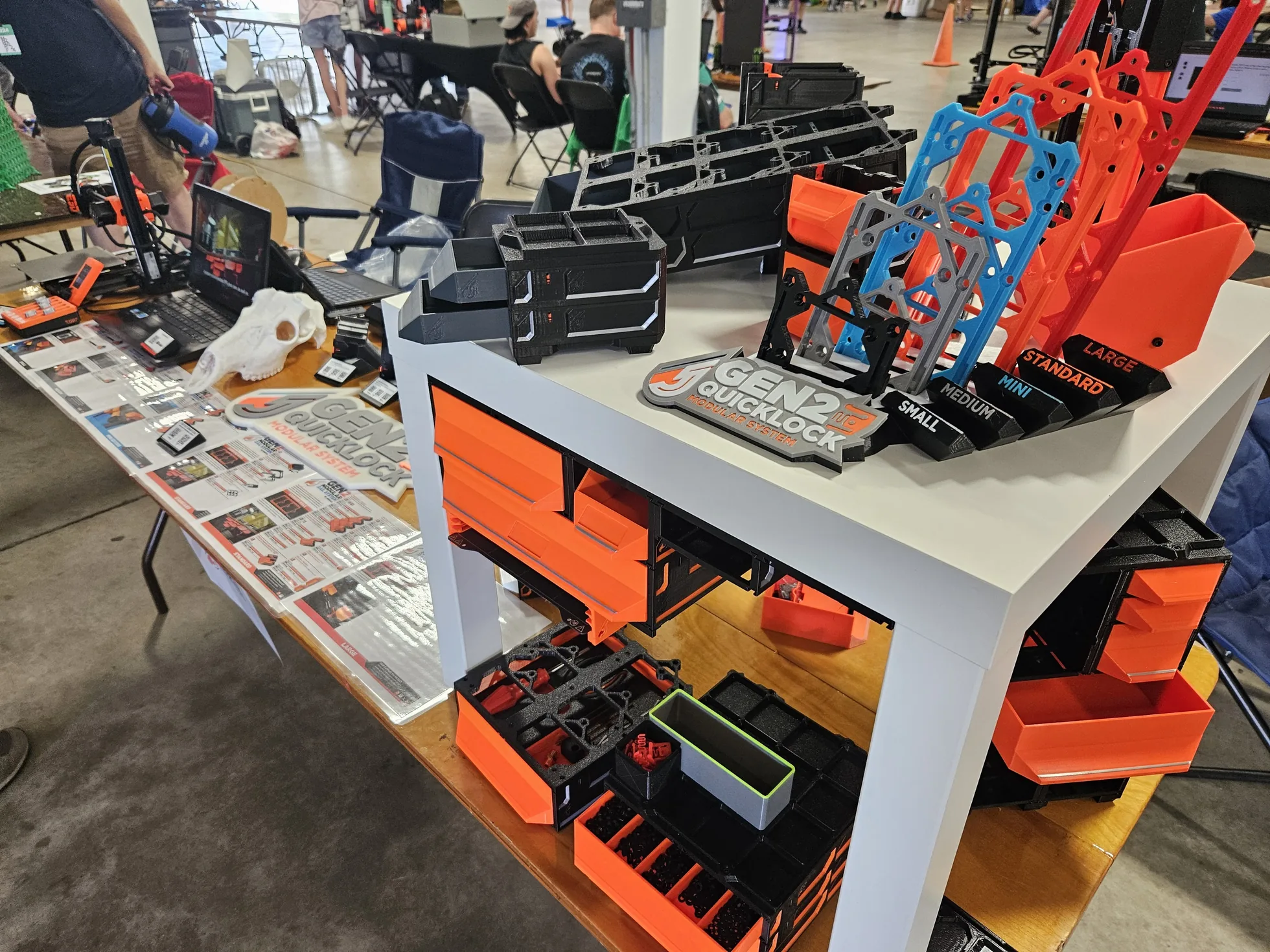
Compatibility kept the old parts useful. QuickLock made the whole system easier to live with.
It leaves the workbench
Useful wherever something needs a place
A 3D printer can do more than make upgrades for itself. It can make objects fitted to the way someone actually uses a home, an office, or a workshop.
Moving into a house made those possibilities easier to see. So did my experience with 5S and Lean manufacturing: good organization means knowing where something belongs without having to think about it - the way you know where the forks and spoons are.
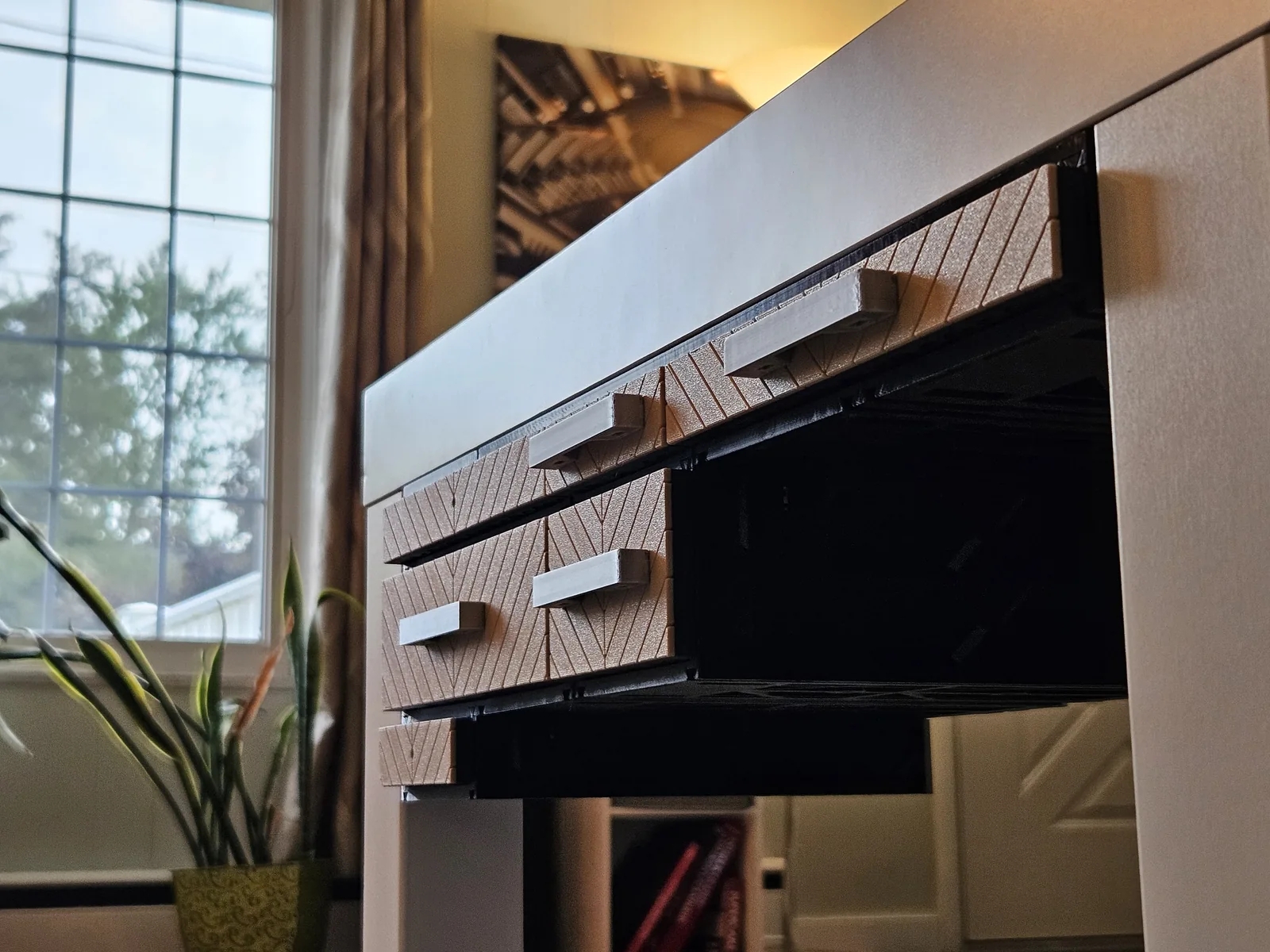
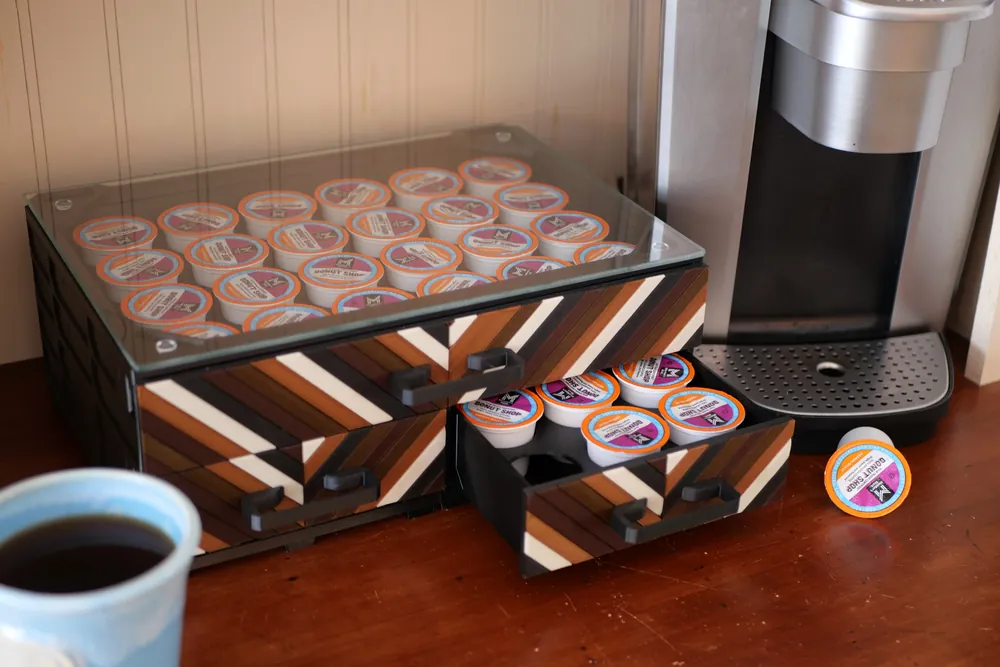
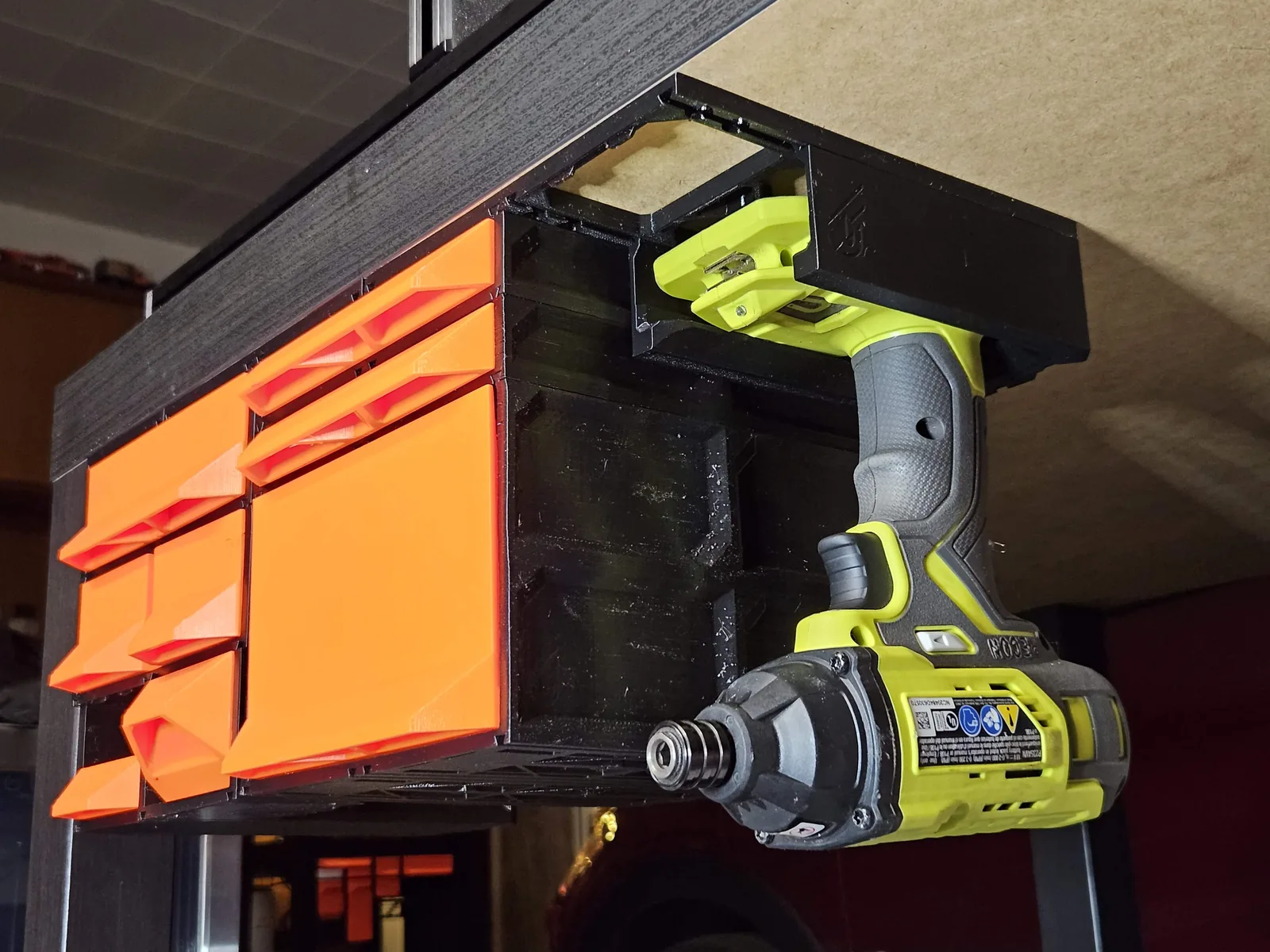
That pushed the system beyond under-table drawers. Wall mounts, shelves, freestanding builds, and decor fronts gave the same compatible parts new jobs in new rooms.
One more should mean one more
Store-bought organizers often decide the quantities and dimensions for you. If you need a twenty-sixth unit, you may have to buy another pack.
With MODULITH, you can print one more drawer, one more case, or one more shelf and place it exactly where the need appears. It can be the size, color, and style that suits the space - not a generic container that merely fits inside it.
This is where customizable storage becomes practical. Not because every setup needs to be elaborate, but because every addition can be exact.
Print exactly what the space asks for. Add the next part only when you need it.
None of it happened alone
The system kept growing because people kept finding their own uses for it. Club members supported new work. Community builds revealed combinations and settings I would not have designed for myself. When someone prints MODULITH, I want the result to feel like theirs.
People started asking me to talk about it, too: podcasts, a designer spotlight, year-end lists, reviews of the system in other people's shops. All of it is collected, credited and dated on one page.
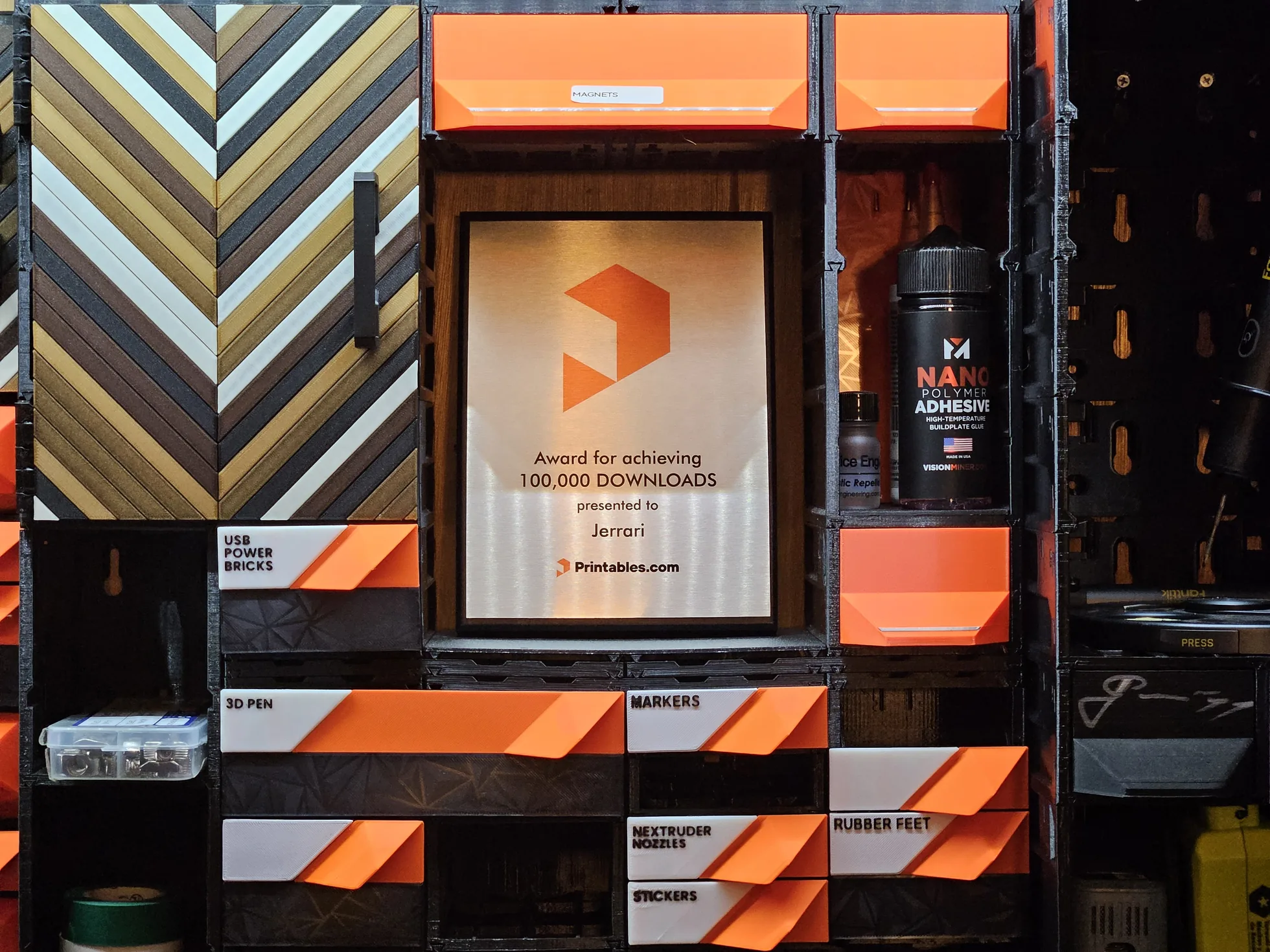
A Printables plaque marked 100,000 downloads. A Designer of the Year nomination in the Printables Awards 2025 followed that March. Both were meaningful; neither changed the next task on the workbench. There was always another part to improve or another use to make possible.
By then, the project had outgrown spare hours. I built a small independent studio around it so it could keep moving forward. I now give it dedicated time every week, with the same aim: make the system more useful without leaving its earlier parts behind.
The people who grew it
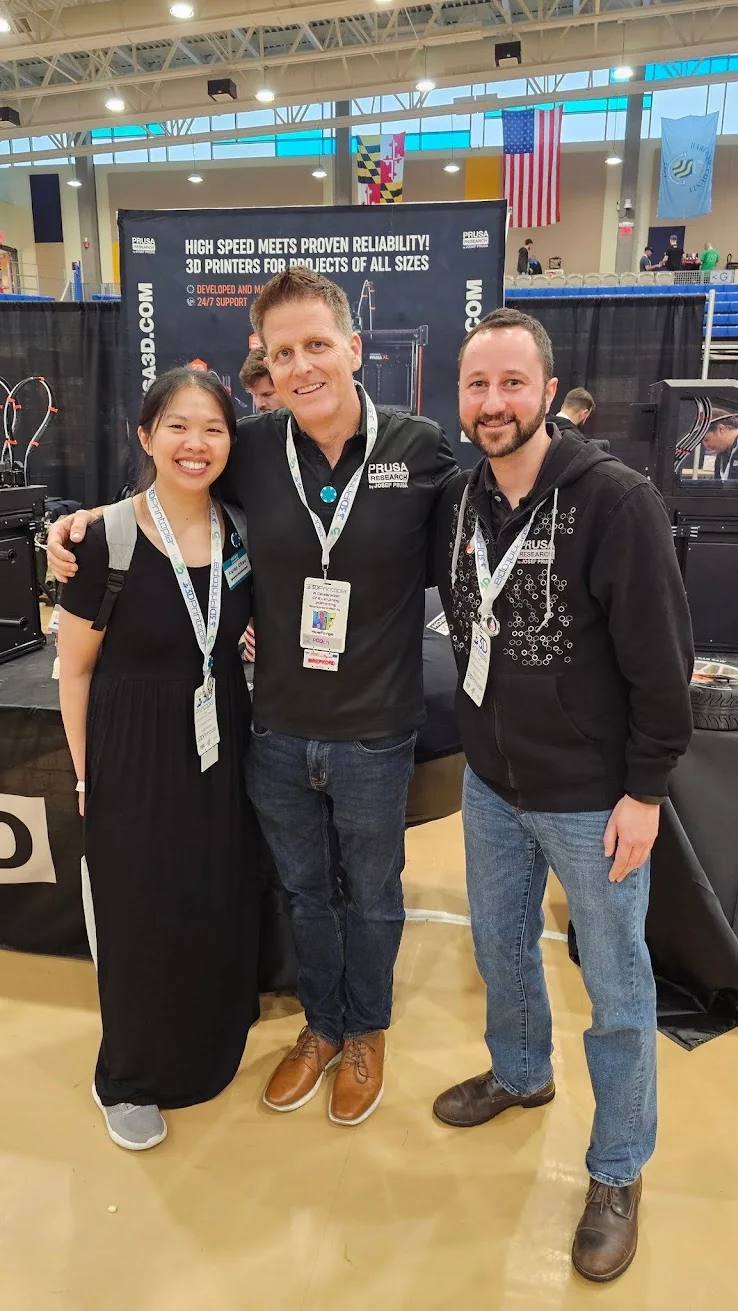
Pooch of Repkord has given me a ton of advice on building a business around this work - in person at RepRap festivals, and indirectly through his Maker That Money podcast. Karen Chau has been a great friend to the project: she introduced me to much of the 3D printing community, and even helped design some very festive faceplates for the system.
The project grew because people like them treated it as something worth growing.
 Designer of the Year nomineePrintables Awards 2025 · March 2026
Community and Club buildsin homes, offices, and workshops
Interviews and featurespodcasts, a designer spotlight, year-end lists
Designer of the Year nomineePrintables Awards 2025 · March 2026
Community and Club buildsin homes, offices, and workshops
Interviews and featurespodcasts, a designer spotlight, year-end lists
GEN2 becomes MODULITH
GEN2 began as a version name for a drawer system associated with an IKEA Lack table. Over time, the system moved well beyond that original setting - and beyond drawers alone.
MODULITH brings together two ideas: modular parts and a solid whole. Each piece can be printed, changed, and placed on its own. Together, the pieces behave like one coherent structure - physical parts with the expandable logic of a system.
The new name is not a new generation replacing the old one. It is a name that finally fits what the project has become. Everything compatible remains compatible. The promise continues.
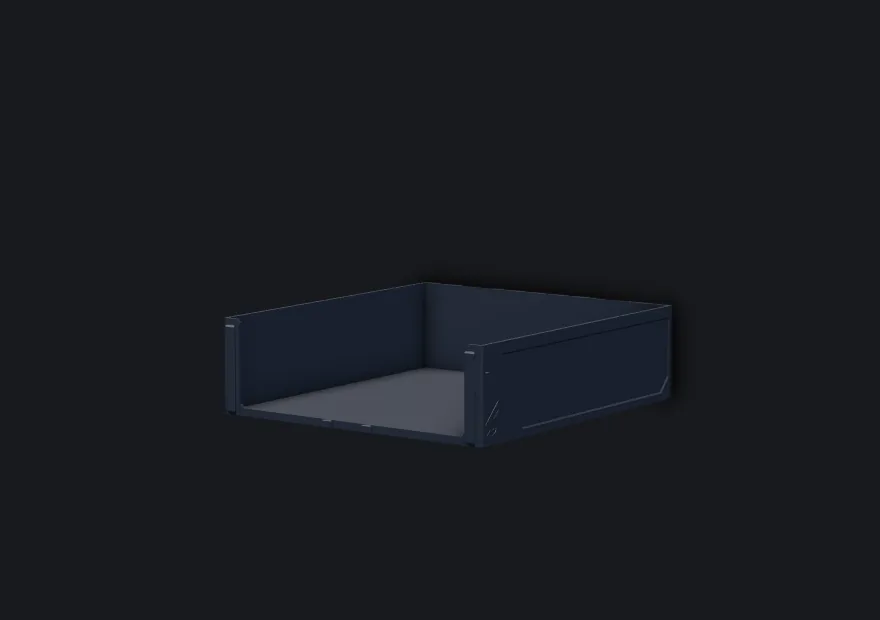
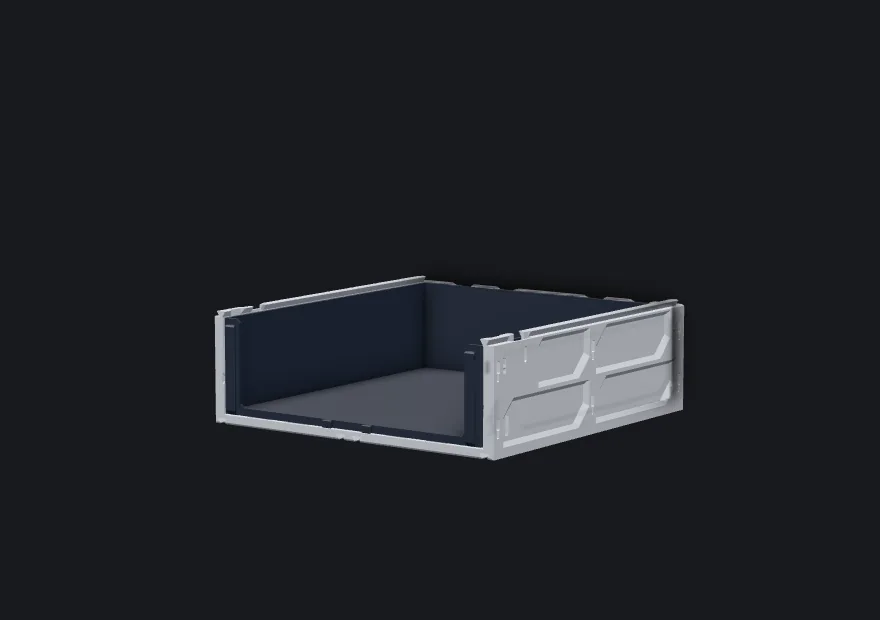
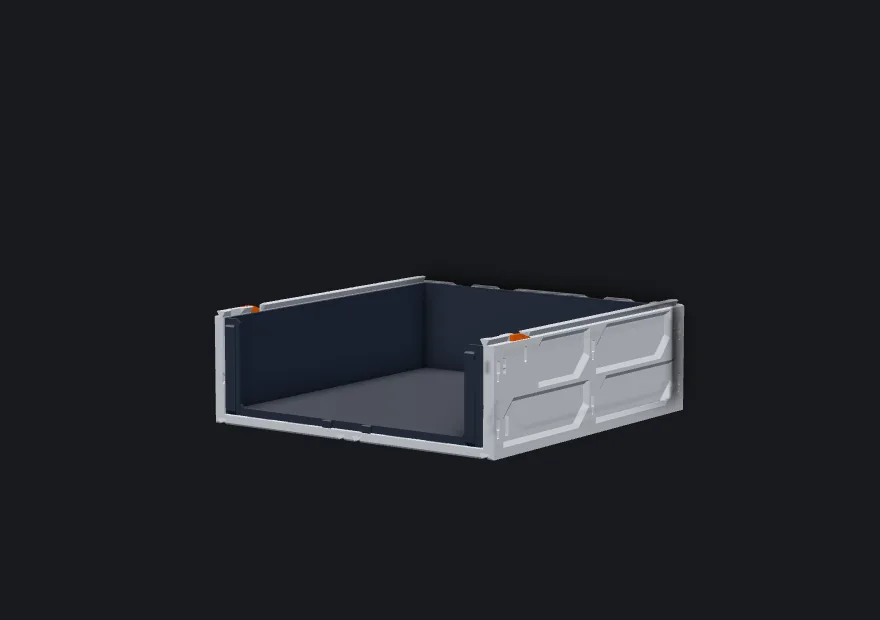
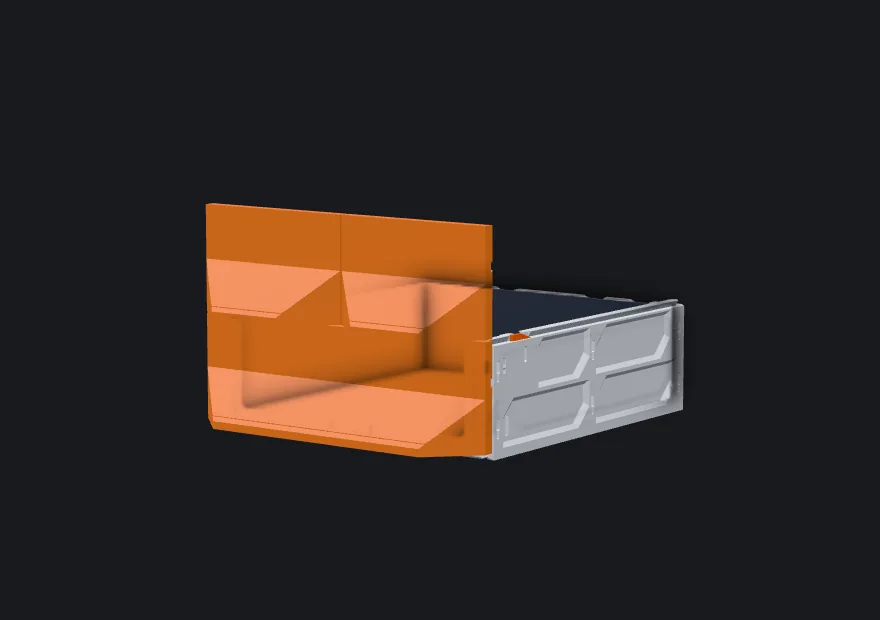
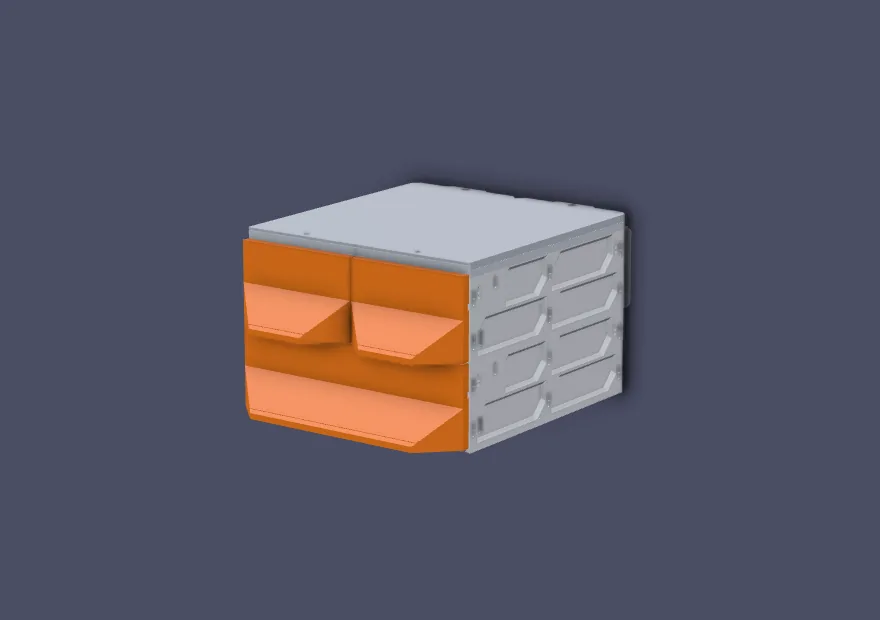
What changed around the drawer.
The drawer stays. A case arrives around it. Then a quicker connection, a front that suits the room, and a new place to mount it. Each step adds possibility without turning the earlier print into waste - the system's growth, in five moves.
A simple place for the parts that had nowhere else to go.
The drawer slides into a case built to connect with the next one.
QuickLock lets the case come out in seconds, without reaching around the back.
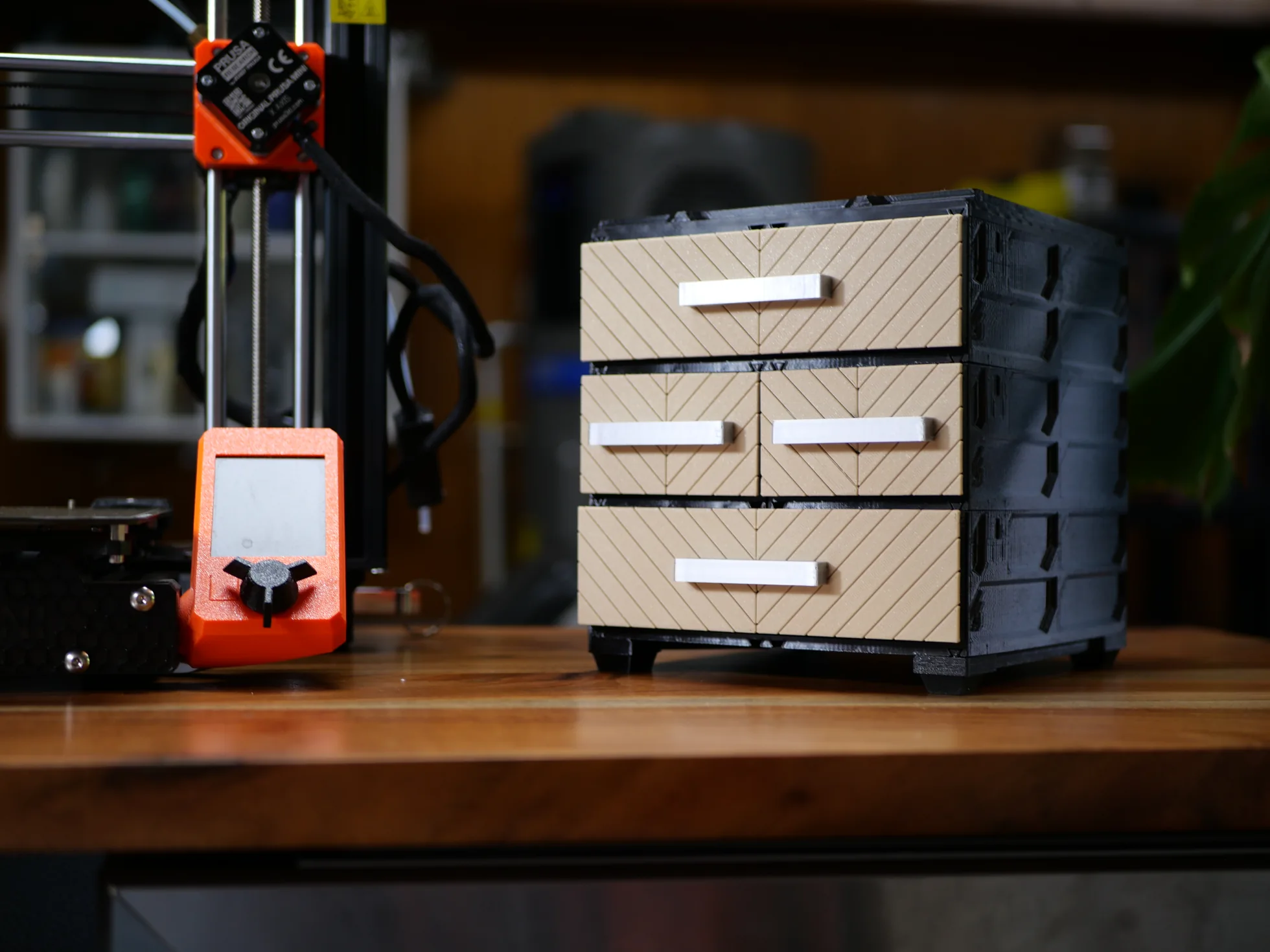
Change the faceplate, handle, color, or style. The useful part can belong in the room around it.
On a desk, under it, or across a wall: the mounting changes. The compatible core does not.
That is the whole MODULITH idea in one drawer: keep the part, change what is possible around it. Rendered from the live part files - these are current parts; the photographs above are what actually existed at the time.
The first drawer still fits.
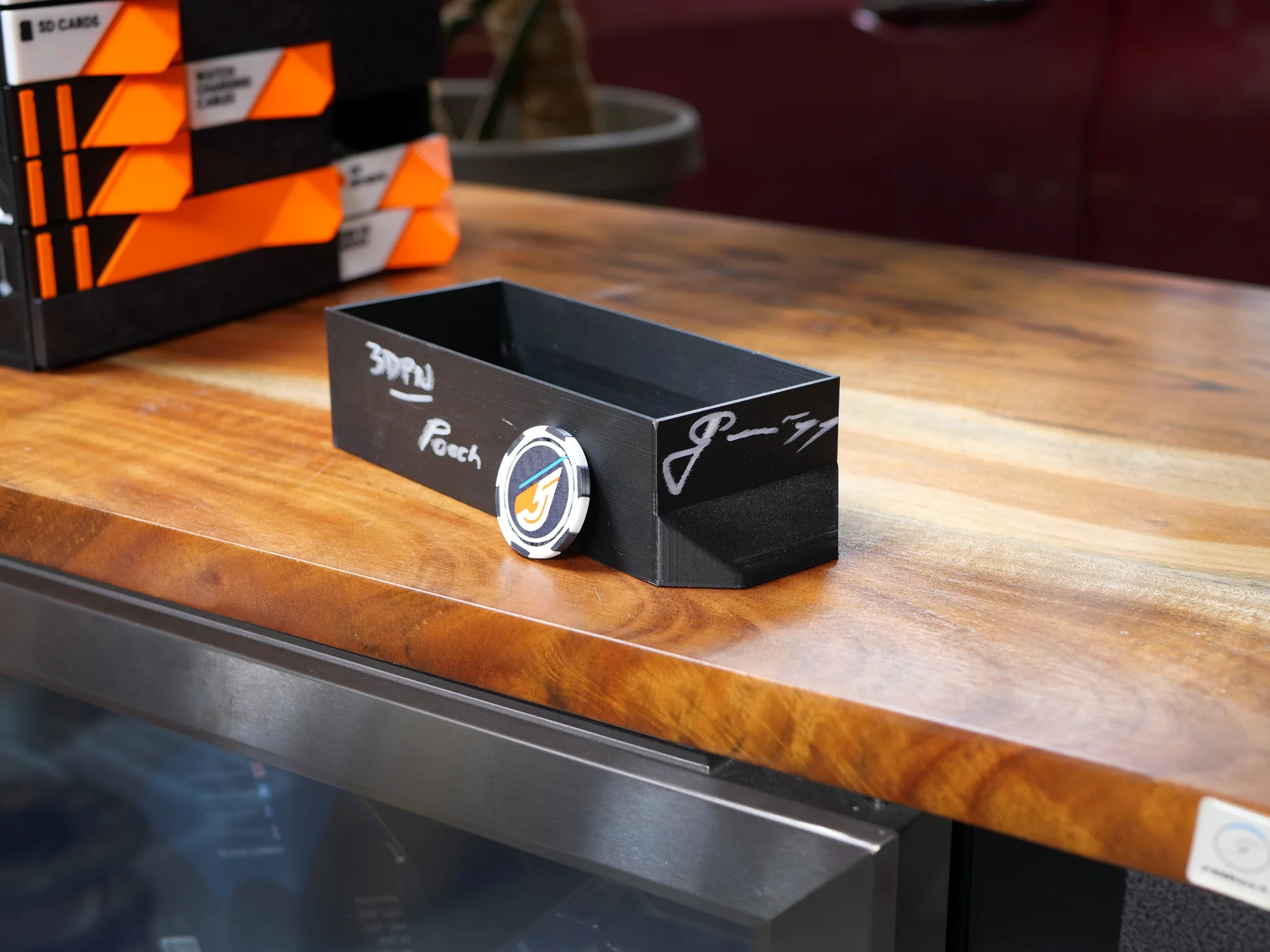
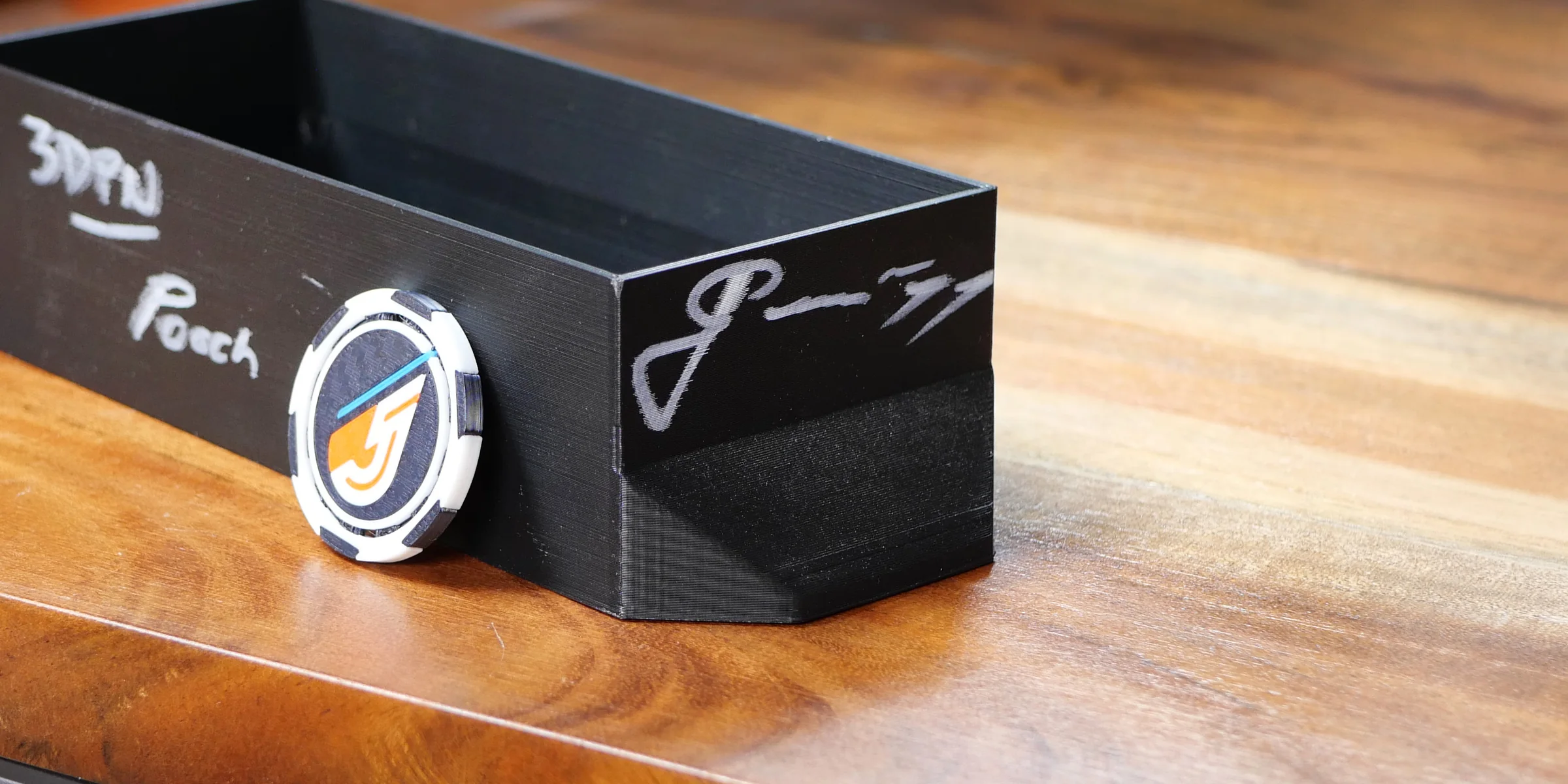
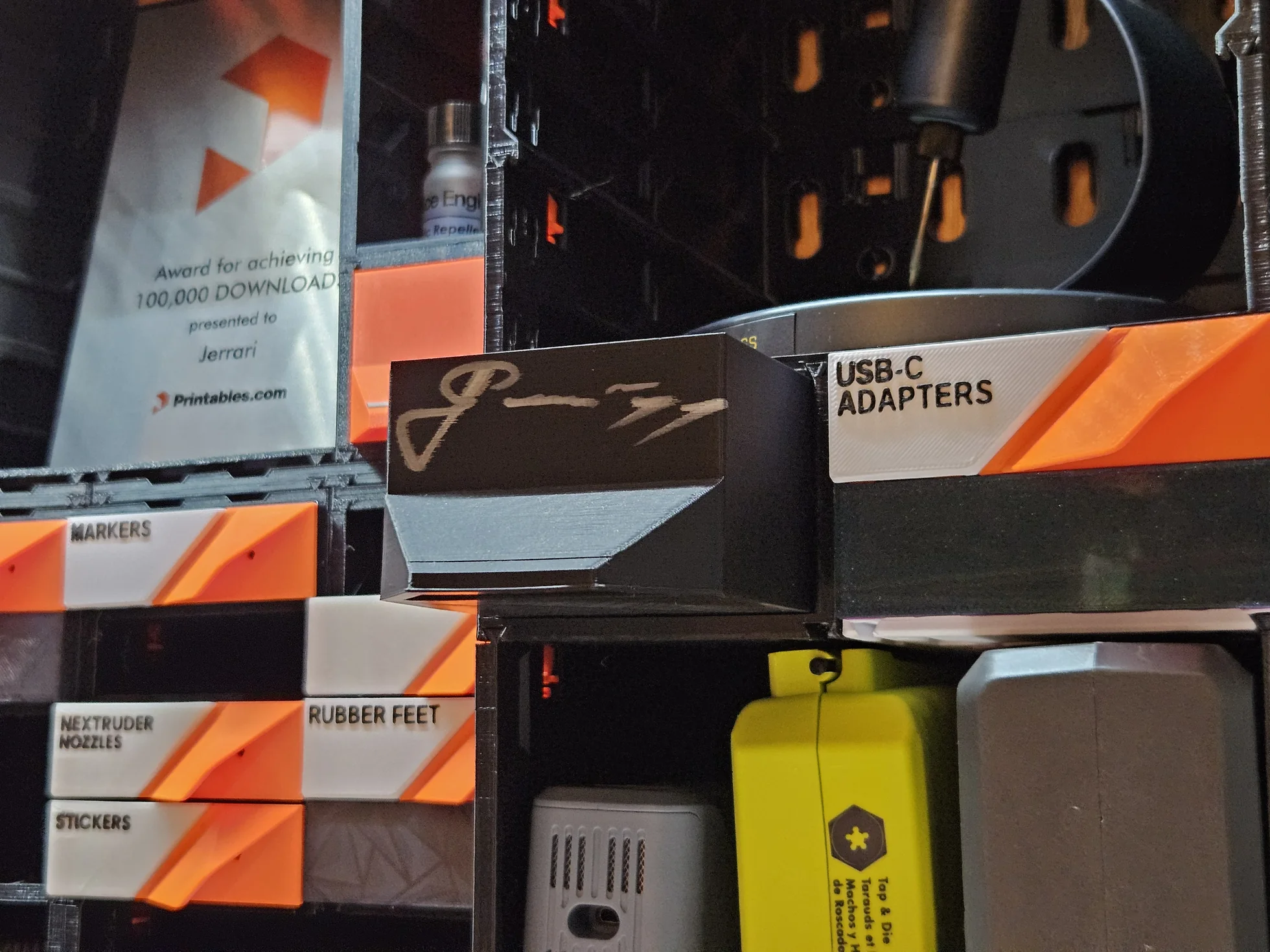
The original drawer from 2019 eventually made its way to Josef Prusa, whose printer helped start all of this. He signed it, and I kept it.
That drawer still fits the newest current cases.
It is a small object, but it carries the whole story: the beginner project, the system that grew around it, and the decision not to make useful prints disposable along the way.
Make the next thing without making the last thing obsolete.
Start with what you need.
One drawer is enough to begin. Add a case, a shelf, or a place on the wall when the need changes. Choose the colors and fronts that make it belong. The system will be ready to grow with it.
See how the system fits together
Make it fit your space. Keep building when you are ready.